Phantom Realm Delhi
Embark on an epic journey through the streets of Delhi, where ancient magic meets modern chaos. A desi action-adventure like no other—filled with masti, dhamaal, and a dash of filmi drama! 🇮🇳
Introduction to Phantom Realm Delhi
Phantom Realm Delhi is not just another video game—it’s a love letter to India’s capital city, wrapped in a fantasy action-adventure that celebrates desi culture, mythology, and the unbeatable spirit of Delhiites. Developed by Daman Games, a rising star in the Indian gaming industry, this title has redefined what it means to create a “desi game” by blending world-class gameplay mechanics with authentic local flavor that resonates with players across the country and beyond.
Launched on March 15, 2024, Phantom Realm Delhi quickly became a sensation, topping download charts on both mobile and PC platforms within days of its release. What makes it stand out? Unlike many international games that shoehorn Indian elements as mere aesthetics, this title weaves Delhi’s rich history, vibrant street culture, and even its infamous traffic jams into the core of its gameplay and narrative. It’s a game where you can fight mythical creatures in the lanes of Chandni Chowk, solve puzzles inspired by Mughal architecture at the Red Fort, and grab a quick plate of chole bhature from a street vendor to replenish health—all while uncovering a centuries-old secret that threatens to destroy the city.
📌 Cultural Note: Delhi, often called the “Heart of India,” is a melting pot of cultures, religions, and eras. From the ancient ruins of Indraprastha to the modern skyscrapers of Gurugram, the city’s duality is what makes it the perfect setting for a game that blends the real and the supernatural. Phantom Realm Delhi captures this duality brilliantly, making every corner of the city feel both familiar and magical.
The game’s success is a testament to the growing demand for authentic Indian gaming experiences. For years, Indian players have had to rely on international titles that rarely reflect their own lives, traditions, or sense of humor. Phantom Realm Delhi changes that by putting desi identity front and center—whether it’s the protagonist cracking jokes in Hinglish, the background score featuring tabla and sitar fused with electronic beats, or the side quests that involve helping a street artist avoid the police or retrieving a stolen lassi from a mischievous spirit.
At its core, Phantom Realm Delhi is a story about belonging. The protagonist, Arjun Varma, is a regular Delhiite—struggling with a dead-end job, a overbearing mother who wants him to get married, and a love for street food that borders on obsession—until he discovers he’s the descendant of a long line of “Shadow Guardians,” tasked with protecting Delhi from the Phantom Realm, a parallel dimension filled with spirits, demons, and forgotten gods. What follows is a journey of self-discovery, as Arjun learns to embrace his heritage, master his newfound powers, and save the city he loves from destruction.
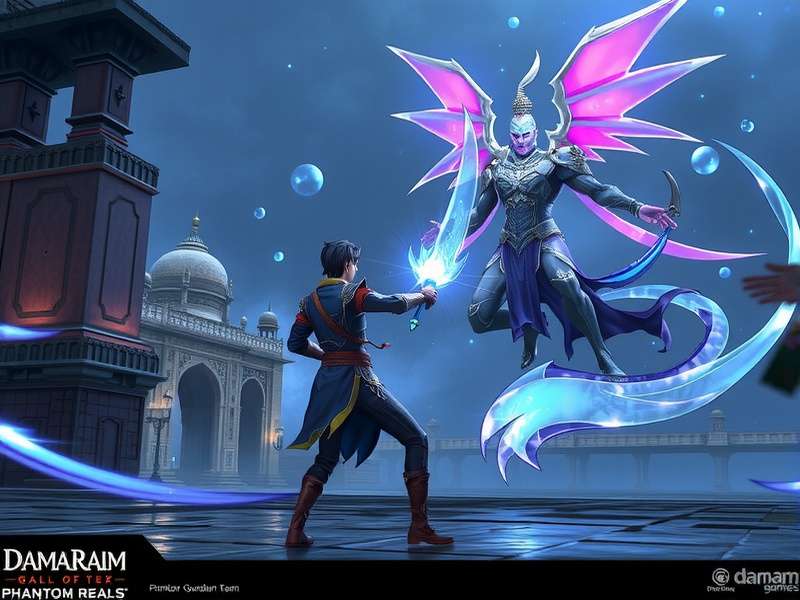
But Phantom Realm Delhi isn’t just for Indian players. Its universal themes of courage, family, and identity, combined with its innovative gameplay and stunning visuals, have attracted a global audience. International critics have praised the game for its fresh setting and cultural authenticity, with many noting that it offers a window into Indian culture that feels respectful and engaging, rather than tokenistic.
Whether you’re a die-hard action-adventure fan, a Delhiite looking to see your city in a new light, or someone curious about Indian culture, Phantom Realm Delhi has something for everyone. It’s a game that proves desi games can compete on the global stage—without sacrificing their roots.
Development History
Conceptualization: A Dream Born in a Delhi Café
The idea for Phantom Realm Delhi first came to life in 2018, when a group of friends—all avid gamers and Delhiites—met at a café in Connaught Place (CP, as locals call it) to vent about the lack of relatable Indian games. “We were tired of playing games set in New York, London, or fantasy worlds that had nothing to do with our lives,” recalls Rajat Mehta, the game’s lead designer and co-founder of Daman Games. “We wanted a game where the protagonist eats parathas for breakfast, complains about Delhi’s pollution, and speaks in the same Hinglish we do. That’s how the concept of Phantom Realm Delhi was born.”
The team spent six months researching Delhi’s history, mythology, and street culture. They visited ancient monuments, interviewed local historians, and even spent days wandering the streets of Old Delhi, observing how people interacted, what they talked about, and what made the city tick. “We wanted every detail to feel authentic,” says Priya Sharma, the game’s narrative director. “For example, when Arjun walks through Chandni Chowk, you’ll hear vendors shouting ‘Chole bhature garam hai!’ (Hot chole bhature!), rickshaw drivers honking, and people arguing about politics—just like in real life. Those little details are what make the game feel alive.”
The team also drew inspiration from Indian mythology, particularly the concept of parallel worlds from the Puranas. “The Phantom Realm isn’t just a random fantasy dimension,” explains Rajat. “It’s rooted in the idea of ‘Patal Lok,’ the netherworld from Hindu mythology, but reimagined for a modern setting. We wanted to blend ancient lore with modern Delhi, so the Phantom Realm is a twisted reflection of the city—where historical monuments are overgrown with magical vegetation, and spirits wear a mix of traditional and contemporary clothing.”
Team & Collaboration: Jugaad at Its Finest
Daman Games started as a small indie studio with just 12 team members, most of whom were recent graduates or industry veterans looking to break free from the constraints of working on international titles. “We had a small budget, but we had passion—and a lot of jugaad,” laughs Rajat. Jugaad, the Indian art of finding innovative solutions with limited resources, became the team’s mantra during development.
One of the biggest challenges was finding voice actors who could nail the authentic Delhi accent. The team held auditions across Delhi, Mumbai, and Bangalore, but struggled to find actors who could balance the casual Hinglish of a modern Delhiite with the emotional depth required for the game’s more dramatic moments. “Finally, we decided to cast local Delhiites—some of whom had never acted before,” says Priya. “It was a risk, but it paid off. The voice acting feels so natural because the actors are actually from the city. They know how Delhiites talk, how they joke, and how they express anger or sadness.”
The team also collaborated with local musicians to create the game’s soundtrack. “We wanted music that felt both traditional and modern,” says Ankit Desai, the game’s audio director. “We worked with tabla players, sitarists, and folk singers from Delhi, and blended their music with electronic beats and orchestral elements. The result is a soundtrack that captures the energy of Delhi—chaotic, vibrant, and full of emotion.”
🎶 Music Trivia: The game’s main theme, “Shadows of Delhi,” features a sample of a traditional Delhi folk song called “Kajra Mohabbat Wala,” reimagined with electronic production. The song became so popular that it was released as a single on Spotify and YouTube, where it has racked up over 10 million streams.
Technical Challenges & Desi Jugaad
Developing an open-world game on a limited budget was no easy feat. The team faced numerous technical challenges, from optimizing the game for mobile devices to creating realistic animations for the game’s many characters and creatures. “We didn’t have the resources of a big studio like Ubisoft or Rockstar,” says Amit Patel, the game’s technical director. “So we had to get creative. For example, instead of creating a fully open world (which would have been too resource-heavy), we designed ‘semi-open’ zones connected by loading screens. Each zone is packed with details, so players still feel like they’re exploring a large, immersive world—without the technical issues.”
Another challenge was creating the Phantom Realm itself. The team wanted the dimension to feel both familiar and alien, so they took real locations in Delhi and twisted them. For example, the Red Fort in the Phantom Realm is covered in bioluminescent vines, and the Yamuna River is filled with glowing spirits. “We used photogrammetry to scan real locations in Delhi, then modified them in 3D software,” explains Amit. “It was a time-consuming process, but it allowed us to create a world that feels authentic to Delhi while still being magical.”
The team also had to adapt to the unique needs of Indian gamers. “Indian players play on a variety of devices—from high-end PCs to budget mobile phones,” says Rajat. “So we spent a lot of time optimizing the game for low-end devices. We added graphics settings that let players reduce the resolution, turn off shadows, and lower the draw distance, so even players with older phones can enjoy the game smoothly.”
Release Timeline: From Crowdfunding to Launch
In 2020, Daman Games launched a crowdfunding campaign on Kickstarter to fund the final stages of development. The campaign exceeded its target by 150%, raising over ₹50 lakh (approximately $60,000) from over 8,000 backers. “The response was overwhelming,” says Priya. “Backers told us that they were excited to see a game that represented their culture, and many offered to help—whether it was sharing stories about Delhi, testing the game, or spreading the word on social media.”
The team spent 2021 and 2022 refining the game, based on feedback from backers and beta testers. They added new side quests, improved the combat system, and expanded the story to include more references to Delhi’s history and culture. “Beta testers loved the cultural elements, but they wanted more,” says Rajat. “So we added quests where you help restore a historic gurdwara, solve a mystery at a haveli in Old Delhi, and even participate in a Holi celebration in CP. Those quests became some of the most popular in the game.”
Phantom Realm Delhi was originally scheduled to launch in late 2023, but the team delayed the release by three months to fix bugs and add more content. “We didn’t want to rush the game,” says Amit. “We wanted to make sure it was polished and lived up to the expectations of our backers. It was a tough decision, but it was the right one—when we finally launched, the game had very few bugs, and players appreciated the extra effort.”
The game launched on March 15, 2024, on PC (Steam, Epic Games Store), PlayStation 5, Xbox Series X/S, and mobile (Android and iOS). It was met with widespread acclaim, with critics praising its storytelling, gameplay, and cultural authenticity. Within a week, it had over 1 million downloads on mobile and 500,000 sales on PC and consoles—making it one of the most successful Indian games of all time.
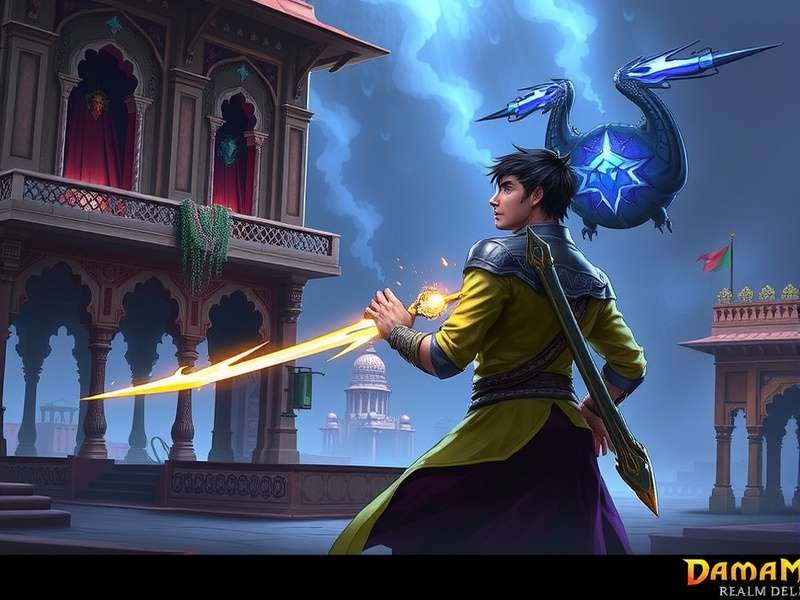
Gameplay Mechanics
Core Gameplay Loop: Explore, Fight, Discover
Phantom Realm Delhi’s gameplay is a blend of action, adventure, exploration, and puzzle-solving—designed to keep players engaged while showcasing Delhi’s diverse landscapes. The core loop revolves around three main activities: exploring Delhi’s streets and the Phantom Realm, fighting enemies (both human and supernatural), and completing quests to progress the story and unlock new abilities.
Exploration is a key part of the game, and the team has gone to great lengths to make Delhi feel like a living, breathing city. Players can wander through the bustling streets of Chandni Chowk, climb the walls of the Red Fort, explore the lush gardens of Lodhi Garden, or navigate the busy highways of Gurugram. Each location is filled with hidden secrets, side quests, and collectibles—from ancient artifacts that reveal the game’s lore to street food stalls that provide temporary buffs (like increased health or faster movement speed).
One of the most unique aspects of the game’s exploration is the ability to switch between the real world and the Phantom Realm at any time (once the ability is unlocked). Switching to the Phantom Realm transforms the environment—ordinary streets become dark and eerie, historical monuments are overgrown with magical plants, and spirits appear in place of humans. This mechanic isn’t just for show; many puzzles and secrets can only be solved by switching between dimensions. For example, a locked door in the real world might be open in the Phantom Realm, or a path blocked by traffic in the real world might be clear in the Phantom Realm.
🚗 Delhi Trivia: The game’s traffic jam sequences are based on real-life Delhi traffic! The team spent hours filming traffic in areas like NH8 and Ring Road to create realistic congestion patterns. In the game, you can even honk your horn to annoy other drivers—just like in real Delhi!
Combat System: Desi Style Action
The combat system in Phantom Realm Delhi is fast-paced, fluid, and inspired by both Indian martial arts and modern action games. Arjun, the protagonist, starts with basic hand-to-hand combat skills, but as he progresses, he unlocks “Shadow Powers” – magical abilities inherited from his ancestors, the Shadow Guardians.
Hand-to-hand combat is based on kalaripayattu, an ancient Indian martial art, and features a variety of punches, kicks, and combos. Players can chain attacks together to create devastating combos, and dodge or parry enemy attacks to gain the upper hand. The combat feels weighty and satisfying, with each hit landing with a satisfying thud, and enemy animations reacting realistically to damage.
Shadow Powers are where the combat really shines. These abilities include:
-
Shadow Slash: A powerful melee attack that sends a wave of shadow energy towards enemies, cutting through multiple targets.
-
Phantom Dash: A quick teleport that lets Arjun dash through enemies or dodge attacks, leaving a trail of shadow energy that damages nearby foes.
-
Spirit Bind: A ranged attack that traps enemies in a cage of shadow energy, preventing them from moving or attacking.
-
Guardian’s Aura: A defensive ability that creates a shield of shadow energy around Arjun, absorbing damage and reflecting projectiles.
-
Delhi’s Wrath: An ultimate ability that summons the spirits of Delhi’s past, dealing massive damage to all enemies in the area and healing Arjun.
Each Shadow Power can be upgraded using “Shadow Essence,” a resource collected by defeating enemies and completing quests. Upgrades make the abilities more powerful, add new effects (like stunning enemies or healing Arjun), and unlock combo abilities that combine multiple Shadow Powers for maximum damage.
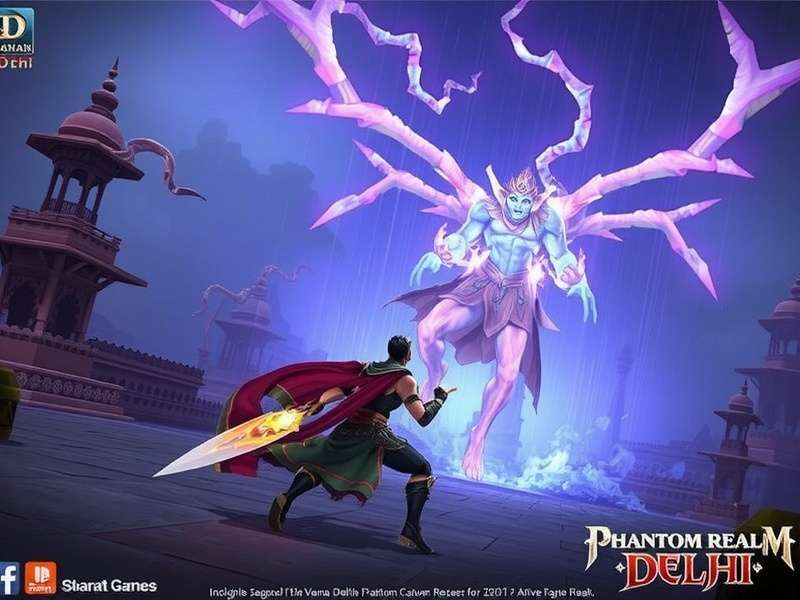
Enemies in the game are diverse, ranging from common thugs and corrupt politicians (in the real world) to spirits, demons, and “Phantom Lords” (in the Phantom Realm). Each enemy has unique attack patterns and weaknesses, so players must adapt their strategy to survive. For example, thugs are weak to hand-to-hand combat, while spirits can only be damaged by Shadow Powers. Phantom Lords, the game’s bosses, are massive, powerful enemies that require careful planning and quick reflexes to defeat—each has a unique phase-based battle, with environmental hazards and puzzle elements that must be solved to progress.
Exploration & Open World Design: Delhi as a Character
Delhi isn’t just a setting in Phantom Realm Delhi—it’s a character in itself. The game’s open world is divided into five main regions, each with its own distinct vibe, landmarks, and challenges:
-
Old Delhi: The heart of the city, filled with narrow lanes, ancient monuments (Red Fort, Jama Masjid), and bustling markets (Chandni Chowk, Karol Bagh). This region is where most of the game’s cultural references are found, with side quests involving local vendors, artisans, and historians.
-
New Delhi: The modern part of the city, featuring wide roads, government buildings (India Gate, Parliament House), and upscale neighborhoods (Connaught Place, Greater Kailash). This region has more combat-focused quests, as it’s where the game’s human antagonists (corrupt politicians and businessmen) operate.
-
Gurugram: The tech hub of Delhi-NCR, with skyscrapers, malls, and IT parks. This region features puzzle-focused quests, as it’s where the Phantom Realm is leaking into the real world through digital devices (thanks to a rogue tech company).
-
Lodhi Garden: A lush, peaceful park filled with ancient tombs and greenery. This region is a hub for side quests involving nature spirits and environmental puzzles, and it’s where Arjun can meet with his mentor to learn new Shadow Powers.
-
Phantom Realm: The parallel dimension, a twisted reflection of Delhi. This region is dark, eerie, and filled with powerful enemies and hidden secrets. It’s where the game’s main story climax takes place, and it’s only accessible after unlocking the ability to switch dimensions.
Each region is connected by fast travel points (unlocked by visiting them for the first time), but players are encouraged to travel on foot or by rickshaw (a drivable vehicle in the game) to explore and discover hidden content. Rickshaws are a fun way to get around—they’re fast, maneuverable, and let players interact with the environment (like honking at other vehicles or picking up passengers for extra Shadow Essence).
Exploration is also rewarded with collectibles, which include:
-
Delhi Relics: Ancient artifacts (like Mughal coins, British-era stamps, and Indus Valley pottery) that reveal the game’s lore and unlock concept art.
-
Street Food Tokens: Collected from food stalls, these tokens can be exchanged for permanent buffs (like increased health, faster stamina regeneration, or stronger Shadow Powers).
-
Shadow Orbs: Hidden in hard-to-reach places, these orbs increase Arjun’s maximum Shadow Energy, allowing him to use more powerful abilities.
-
Cultural Postcards: Found in iconic locations, these postcards feature facts about Delhi’s history and culture, written in a humorous, relatable style.
Puzzles & Side Quests: Masti with a Purpose
Puzzles in Phantom Realm Delhi are designed to be challenging but rewarding, and they often tie into Delhi’s history and culture. For example, one puzzle requires players to rearrange Mughal-era tiles in the Red Fort to match a pattern from the Quran, while another involves solving a riddle based on Delhi’s founding myth (the story of Indraprastha).
Many puzzles also require switching between the real world and the Phantom Realm. For example, a puzzle in Lodhi Garden might involve finding a series of symbols in the real world that only appear in the Phantom Realm, or using Shadow Powers to activate ancient mechanisms that are hidden from view in the real world. The puzzles never feel tedious—they’re designed to be part of the exploration, rather than a distraction from it.
Side quests are another highlight of the game, and they’re where the game’s cultural authenticity really shines. Unlike many open-world games, where side quests feel like repetitive fetch tasks, Phantom Realm Delhi’s side quests are unique, story-driven, and filled with humor and heart. Some of the most popular side quests include:
-
The Great Chole Bhature Hunt: Help a street vendor find his stolen recipe book, which has been taken by a mischievous spirit. The quest involves chasing the spirit through the lanes of Chandni Chowk, fighting off other spirits, and finally retrieving the recipe book—unlocking a permanent buff that lets Arjun heal by eating chole bhature.
-
Save the Haveli: A historic haveli in Old Delhi is being threatened by a corrupt builder who wants to demolish it to build a mall. Arjun must gather evidence of the builder’s illegal activities, fight off his goons, and convince the local government to protect the haveli. Completing this quest unlocks a new fast travel point and a powerful Shadow Power (Guardian’s Aura).
-
Holi Havoc: During a Holi celebration in CP, a group of spirits has stolen the colored powder, ruining the festival. Arjun must track down the spirits, retrieve the powder, and join the celebration—unlocking a fun, temporary ability that lets him throw colored powder at enemies to stun them.
-
The Missing Lassi: A farmer from Punjab has come to Delhi to sell his famous lassi, but it’s been stolen by a group of thugs. Arjun must find the thugs, defeat them in combat, and return the lassi—earning a permanent buff that increases his movement speed and a side story about the importance of preserving traditional crafts.
Side quests aren’t just for fun—they also provide valuable rewards, like Shadow Essence, collectibles, and new abilities. They also help flesh out the game’s world and characters, making Delhi feel more alive and immersive. Many side quests also have multiple endings, depending on the choices players make—adding replayability to the game.
Progression System: From Ordinary Delhiite to Shadow Guardian
Phantom Realm Delhi’s progression system is designed to make players feel like they’re growing from an ordinary Delhiite to a powerful Shadow Guardian. The system has three main components: Leveling Up, Shadow Power Upgrades, and Gear.
Leveling Up: Arjun gains experience points (XP) by completing quests, defeating enemies, and collecting collectibles. Each time he levels up, he gains a skill point, which can be spent on three skill trees: Combat, Exploration, and Shadow Powers.
-
Combat Tree: Improves hand-to-hand combat skills, including increased damage, longer combos, and better dodge/parry timing.
-
Exploration Tree: Enhances exploration abilities, like faster movement speed, improved climbing, and the ability to detect collectibles and secrets.
-
Shadow Powers Tree: Unlocks new Shadow Powers and improves existing ones, like increased damage, shorter cooldowns, and new combo abilities.
Shadow Power Upgrades: As mentioned earlier, Shadow Powers can be upgraded using Shadow Essence. Each ability has three tiers of upgrades, with the third tier unlocking a unique bonus (like a stun effect or area-of-effect damage). Players can reset their upgrades at any time (for a small fee of Shadow Essence), allowing them to experiment with different builds.
Gear: Arjun can equip a variety of gear items, including weapons, armor, and accessories. Weapons range from basic fists (early game) to Shadow-infused swords and axes (late game), each with unique stats and abilities. Armor provides protection against damage, and some sets have set bonuses (like increased Shadow Energy regeneration or resistance to spirit attacks). Accessories, like amulets and rings, provide additional buffs, like increased XP gain or better loot drops.
Gear can be obtained by completing quests, defeating bosses, or purchasing it from merchants (who accept Shadow Essence or street food tokens as currency). The game also features a crafting system, where players can combine materials (collected from the environment or enemies) to create powerful gear. For example, combining a Mughal-era sword hilt (found in the Red Fort) with Shadow Essence (collected from enemies) creates the “Shadow Saber,” a powerful weapon that deals both physical and Shadow damage.
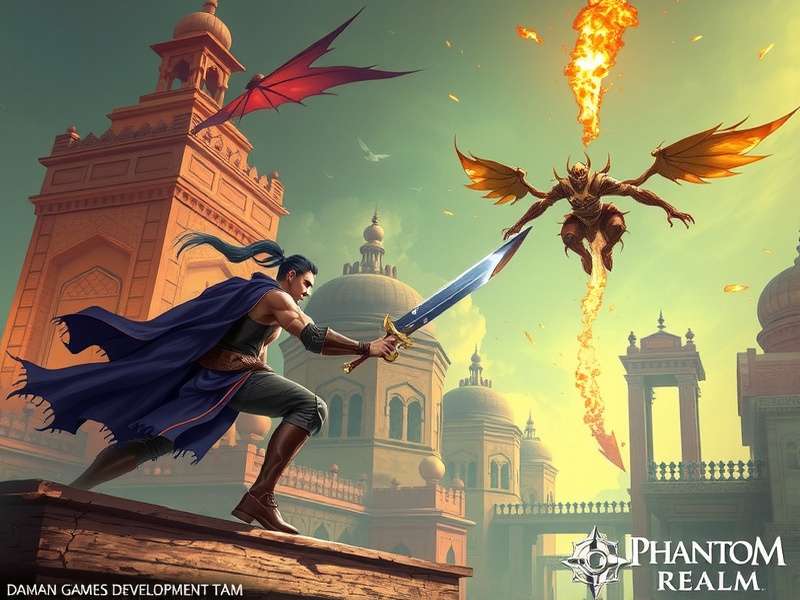
Story & Narrative
Setting: Delhi’s Dual Reality
Phantom Realm Delhi is set in a version of Delhi where two worlds exist side by side: the real world, a bustling metropolis filled with millions of people, and the Phantom Realm, a parallel dimension populated by spirits, demons, and forgotten gods. For centuries, these two worlds have been separated by a magical barrier, maintained by the Shadow Guardians—descendants of the ancient warriors who first sealed the Phantom Realm away.
But in recent years, the barrier has begun to weaken. Pollution, corruption, and the loss of cultural heritage have eroded the magic that keeps the Phantom Realm at bay, allowing spirits and demons to leak into the real world. As a result, Delhi has been plagued by mysterious disappearances, strange weather phenomena, and a general sense of unease. Most people dismiss these events as coincidence or urban legends, but the Shadow Guardians know the truth: the Phantom Realm is about to break free, and Delhi is on the brink of destruction.
The game’s setting is a love letter to Delhi’s duality—old and new, sacred and profane, chaotic and beautiful. The real world is depicted with stunning accuracy, from the narrow lanes of Old Delhi to the modern skyscrapers of Gurugram. The Phantom Realm, by contrast, is a dark, twisted version of the city—where the Red Fort is a fortress of shadow, Chandni Chowk is a maze of floating lanterns and ghostly vendors, and India Gate is a monument to forgotten gods. The contrast between the two worlds is not just visual—it’s thematic. The real world represents modern Delhi, with its problems (pollution, corruption, gentrification) and its strengths (resilience, diversity, community). The Phantom Realm represents Delhi’s past—its history, mythology, and cultural heritage—both the good (ancient wisdom, spiritualism) and the bad (forgotten evils, unresolved conflicts).
🏛️ Mythology Note: The Shadow Guardians are inspired by the “Naga Sadhus” of Indian mythology—warrior monks who possess supernatural powers and protect the innocent. The game’s lore also draws from the Mahabharata, with Arjun (the protagonist) named after the Pandava prince, and the Phantom Realm modeled after Patal Lok, the netherworld ruled by the Naga kings.
Main Plot: The Rise of the Shadow Guardian
The game begins with Arjun Varma, a 25-year-old software engineer from Delhi, stuck in a dead-end job at a tech company in Gurugram. Arjun is dissatisfied with his life—he hates his job, his mother is constantly pressuring him to get married, and he feels like he’s not living up to his potential. His only escape is exploring Delhi’s streets, eating street food, and hanging out with his best friend, Raj, a struggling journalist who’s obsessed with uncovering conspiracy theories.
One night, Arjun is walking home from a late shift when he witnesses a group of thugs attacking an old man in a dark alley. Arjun, being the brave (if somewhat reckless) Delhiite he is, steps in to help—only to discover that the old man is no ordinary person. He’s a Shadow Guardian, and the thugs are actually spirits in human form. The old man is fatally wounded, but before he dies, he transfers his powers to Arjun, telling him: “You are the last of the Shadow Guardians. Protect Delhi. Stop the Phantom Lord.”
Confused and scared, Arjun flees the alley, but he soon realizes that his life has changed forever. He starts seeing spirits everywhere—on the streets, in his apartment, even at work. He also discovers that he has newfound powers: he can move faster than the eye can see, punch through walls, and even see into the Phantom Realm. With the help of Raj (who is thrilled to have a real conspiracy to investigate) and Meera, a young historian who specializes in Delhi’s mythology, Arjun sets out to learn more about the Shadow Guardians and the Phantom Lord.
As Arjun delves deeper into Delhi’s history and mythology, he discovers that the Phantom Lord is actually Ravana, the demon king from the Ramayana, who was banished to the Phantom Realm centuries ago. Ravana has been plotting his escape for years, and he’s using the weakening barrier to gather power and recruit followers—both human (corrupt politicians, greedy businessmen) and supernatural (spirits, demons).
Ravana’s plan is to use a powerful artifact called the “Gem of Delhi,” which is hidden somewhere in the city, to break the barrier between the real world and the Phantom Realm permanently. Once the barrier is broken, Ravana will be able to conquer Delhi, and then the rest of the world, using his army of spirits and demons.
Arjun’s journey takes him across Delhi, from the ancient ruins of Indraprastha to the modern tech parks of Gurugram. Along the way, he faces numerous challenges: he must fight off Ravana’s followers, solve puzzles to uncover the Gem of Delhi’s location, and come to terms with his new identity as a Shadow Guardian. He also learns more about his own family history—discovering that his father, who left when he was a child, was also a Shadow Guardian, and that he sacrificed himself to weaken Ravana years ago.
The climax of the game takes place in the Phantom Realm, where Arjun confronts Ravana in a massive battle. With the help of his friends and the spirits of Delhi’s past (who are inspired by Arjun’s courage to fight back), Arjun defeats Ravana and re-seals the Phantom Realm. But the victory comes at a cost: Raj is seriously injured, and Meera sacrifices herself to help Arjun activate the Gem of Delhi. In the end, Arjun becomes the new protector of Delhi, vowing to keep the city safe from the Phantom Realm and any other threats that may come its way.
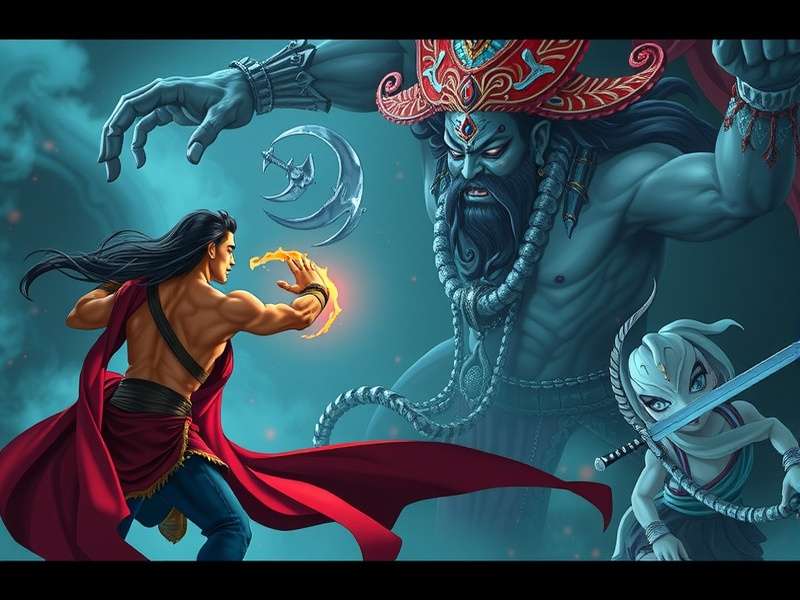
Lore & Worldbuilding: The Secrets of Delhi’s Past
Phantom Realm Delhi’s lore is rich and detailed, drawing from Delhi’s 5,000-year history, Indian mythology, and local legends. The game’s worldbuilding is done through a variety of methods: collectibles (like Delhi Relics and Cultural Postcards), dialogue with NPCs, and environmental storytelling (like murals on walls, ancient inscriptions, and ghostly projections).
One of the key elements of the game’s lore is the origin of the Shadow Guardians. According to the game’s backstory, the Shadow Guardians were founded by Arjuna (the Pandava prince from the Mahabharata) after the Kurukshetra War. Arjuna, realizing that the war had unleashed powerful evil spirits into the world, created the Shadow Guardians to protect humanity from these spirits and seal them away in the Phantom Realm. Over the centuries, the Shadow Guardians passed down their powers and knowledge from generation to generation, with each guardian dedicating their life to protecting Delhi.
Another important part of the lore is the Gem of Delhi. The gem was created by the gods to maintain the barrier between the real world and the Phantom Realm. It’s said to be made from the tears of Parvati, the Hindu goddess of love and devotion, and it’s hidden somewhere in Delhi—protected by ancient magic and puzzles. The gem’s power is tied to Delhi’s cultural heritage; as people forget their history and traditions, the gem weakens, and the barrier between the worlds begins to break.
The game also explores the idea of “spiritual pollution”—the idea that human actions (like corruption, greed, and the destruction of cultural heritage) can have a negative impact on the spiritual world. This is a recurring theme throughout the game, with many side quests involving Arjun cleaning up pollution, preserving historic sites, or exposing corrupt officials—all of which help strengthen the barrier between the real world and the Phantom Realm.
One of the most interesting aspects of the game’s lore is the way it weaves real historical events into its fantasy narrative. For example, the game’s backstory includes references to the Mughal Empire, the British Raj, and India’s independence—explaining how each of these events affected the Phantom Realm and the Shadow Guardians. For example, during the Mughal Empire, the Shadow Guardians worked with Emperor Akbar to build the Red Fort, which was designed to be a fortress that could protect the Gem of Delhi. During the British Raj, the Shadow Guardians went into hiding, as the British government’s policies of cultural assimilation weakened the barrier between the worlds. And after India’s independence, the Shadow Guardians emerged again, working with the new government to preserve Delhi’s cultural heritage and strengthen the barrier.
Cultural References & Local Flair: Delhi in Every Detail
Phantom Realm Delhi is packed with cultural references and local flair that will resonate with Indian players—especially Delhiites. From the food to the fashion, the language to the landmarks, every detail of the game is designed to feel authentic and relatable.
Food is a big part of the game’s cultural references. Arjun can eat a variety of Delhi street foods, including chole bhature, parathas, lassi, samosas, and jalebi—each of which provides a temporary buff. The game even includes a “foodie” side quest, where Arjun must try all of Delhi’s famous street foods to unlock a permanent buff (the “Delhi Foodie” achievement, which increases his health and stamina). The food stalls are designed to look like real Delhi street vendors, with vendors shouting slogans in Hinglish and serving food in traditional utensils.
Language is another key part of the game’s cultural authenticity. The game’s dialogue is mostly in Hinglish (a mix of Hindi and English), which is how most Delhiites communicate. Characters use phrases like “yaar,” “bhai,” “chak de phatte,” and “sab kuch thik hai” (everything is okay), and they crack jokes about Delhi’s traffic, pollution, and politics. The game also includes subtitled Hindi dialogue for NPCs who speak in pure Hindi, making it accessible to players who don’t speak the language.
Fashion is another area where the game shines. Arjun’s default outfit is a casual Delhiite look: a plain t-shirt, jeans, and sneakers. As he progresses, he can unlock traditional Indian outfits, like a kurta-pajama, a sherwani, and a turban—each of which has unique stats and abilities. NPCs also wear a variety of outfits, from traditional salwar kameez and sarees to modern western clothes, reflecting Delhi’s diverse fashion sense.
Landmarks are, of course, a big part of the game’s setting. The game features accurate representations of Delhi’s most famous landmarks, including the Red Fort, Jama Masjid, India Gate, Connaught Place, and Lodhi Garden. Each landmark is recreated with stunning detail, and many have unique quests or secrets tied to them. For example, the Red Fort is where Arjun finds the first clue to the Gem of Delhi’s location, while India Gate is where he meets with the spirit of his father, who gives him a powerful Shadow Power.
Festivals are also featured prominently in the game. The game includes quests tied to Diwali (the festival of lights), Holi (the festival of colors), and Durga Puja (the festival of the goddess Durga). During Diwali, the streets of Delhi are decorated with rangoli and lanterns, and Arjun can participate in a “diyas lighting” quest to strengthen the barrier between the worlds. During Holi, the streets are filled with colored powder, and Arjun can throw powder at enemies to stun them. And during Durga Puja, Arjun can help a local community set up a pandal (temporary temple) and fight off spirits that are trying to disrupt the festival.
All of these cultural references aren’t just for show—they’re an integral part of the game’s narrative and gameplay. They make the game feel like a love letter to Delhi, and they help players connect with the world and the characters on a deeper level.
Characters
Protagonist: Arjun Varma – The Reluctant Hero
Arjun Varma is the protagonist of Phantom Realm Delhi, and he’s everything you’d expect from a modern Delhiite—funny, sarcastic, a little lazy, but with a heart of gold. At 25, Arjun is stuck in a dead-end job as a software engineer at a tech company in Gurugram, where he spends his days debugging code and dreaming of a better life. He’s not a hero by choice; he’s a regular guy who’s thrust into a world of magic and danger, and he has to learn to adapt quickly.
Arjun’s personality is one of the game’s biggest strengths. He’s relatable—he complains about Delhi’s traffic, loves street food, and has a complicated relationship with his mother (who calls him every five minutes to ask about his love life). He’s also funny, cracking jokes even in the most dangerous situations. For example, when he first discovers his Shadow Powers, he quips: “Finally, something cooler than my Instagram reel about chole bhature!” But beneath his sarcasm, Arjun is brave and loyal. He’ll do anything to protect his friends and his city, even if it means putting his own life on the line.
Arjun’s character arc is one of self-discovery. At the start of the game, he’s directionless and unhappy with his life. He feels like he’s not living up to his potential, and he’s scared of commitment (both in his career and his personal life). But as he embraces his role as a Shadow Guardian, he learns to take responsibility, trust his instincts, and believe in himself. By the end of the game, he’s no longer the lazy software engineer—he’s a confident, powerful hero who’s proud of his heritage and his city.
Arjun’s appearance is designed to be relatable and casual. He has short black hair, brown eyes, and a lean build. His default outfit is a plain white t-shirt, blue jeans, and white sneakers—typical Delhiite attire. As he progresses, he can unlock new outfits, including a black kurta-pajama (for formal occasions), a leather jacket (for combat), and the Shadow Guardian armor (a black and gold outfit with a cape, inspired by ancient Indian warrior armor).
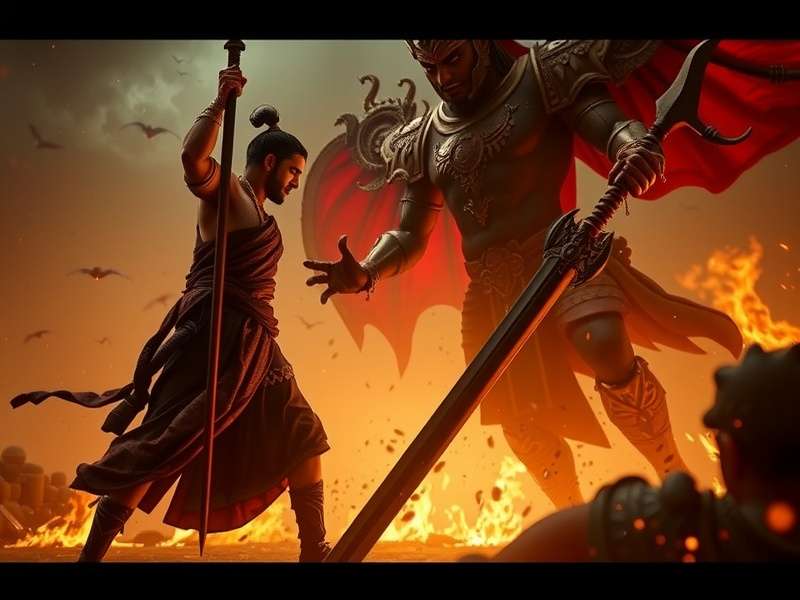
Antagonists: The Shadow Council – Ravana & His Followers
The main antagonist of Phantom Realm Delhi is Ravana, the demon king from the Ramayana, who has been trapped in the Phantom Realm for centuries. But Ravana isn’t just a one-dimensional villain—he’s a complex character with a tragic backstory. According to the game’s lore, Ravana was once a powerful king who ruled over Lanka (modern-day Sri Lanka) with wisdom and compassion. But his pride and ambition led him to challenge the gods, and he was banished to the Phantom Realm as punishment.
Over the centuries, Ravana’s anger and resentment grew. He blamed the gods for his banishment, and he began to plot his escape. He realized that the barrier between the real world and the Phantom Realm was weakening due to Delhi’s spiritual pollution, and he saw an opportunity to conquer the world. Ravana is a powerful villain—he has superhuman strength, can control spirits and demons, and has a variety of magical abilities, including fire breath and teleportation. But he’s also intelligent and manipulative, using human greed and corruption to further his goals.
Ravana is not alone in his quest. He’s joined by the Shadow Council, a group of powerful villains who serve as his lieutenants. Each member of the Shadow Council has their own motives for helping Ravana, and they each control a different part of Delhi. The members of the Shadow Council are:
-
Vikram Singhania: A corrupt industrialist who controls Gurugram’s tech parks. Vikram is greedy and power-hungry, and he’s helping Ravana in exchange for wealth and immortality. He’s responsible for building a factory that’s polluting the environment and weakening the barrier between the worlds. In combat, Vikram uses advanced technology (like drones and laser weapons) to fight Arjun.
-
Maya Devi: A former Shadow Guardian who betrayed her order to join Ravana. Maya is bitter and resentful—she blames the Shadow Guardians for the death of her family, and she believes that Ravana’s plan will create a better world. She’s a powerful magic user, with the ability to control shadows and cast illusions. She serves as Arjun’s foil, showing him what he could become if he lets his anger and resentment consume him.
-
Kaal: A ancient demon who feeds on fear and despair. Kaal is Ravana’s most loyal follower, and he’s responsible for spreading chaos and panic in Delhi. He can shapeshift into any form, and he uses his powers to manipulate people into doing Ravana’s bidding. Kaal is a terrifying villain—his true form is a shadowy figure with glowing red eyes, and he feeds on the fear of his victims.
-
Rakesh Sharma: A corrupt politician who controls New Delhi. Rakesh is ambitious and ruthless, and he’s helping Ravana in exchange for political power. He’s responsible for passing laws that allow the destruction of historic sites, which weakens the barrier between the worlds. In combat, Rakesh uses his bodyguards and political influence to fight Arjun—he even has a army of corrupt police officers at his disposal.
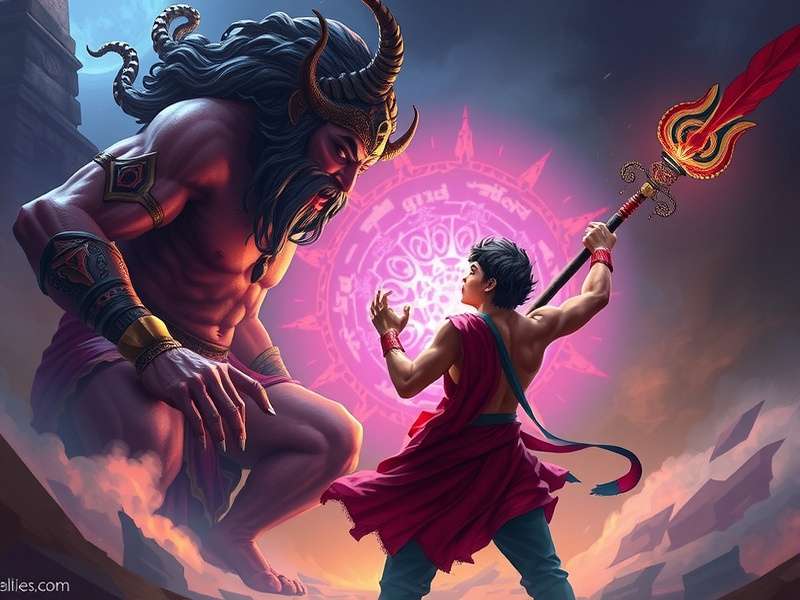
Supporting Cast: Friends, Mentors, and Allies
Arjun isn’t alone in his journey—he’s joined by a cast of memorable supporting characters who help him along the way. These characters are just as relatable and well-developed as Arjun, and they add depth and heart to the game’s narrative.
Raj Patel: Arjun’s best friend and a struggling journalist. Raj is obsessed with conspiracy theories, and he’s thrilled when he discovers that Arjun is a Shadow Guardian. He’s the comic relief of the game, cracking jokes and providing Arjun with information (he’s a master of research, thanks to his job as a journalist). Raj is loyal and brave, and he’s always willing to help Arjun—even if it means putting himself in danger. His character arc involves learning to take his job seriously and use his skills to help others, rather than just chasing sensational stories.
Meera Chaudhary: A young historian who specializes in Delhi’s mythology. Meera is intelligent, curious, and passionate about preserving Delhi’s cultural heritage. She meets Arjun when he visits the National Museum to learn more about the Shadow Guardians, and she quickly becomes his love interest and his most trusted ally. Meera is the brains of the group—she deciphers ancient inscriptions, solves puzzles, and provides Arjun with information about Delhi’s history and mythology. Her character arc involves learning to embrace her own courage and stand up for what she believes in, even when it’s dangerous.
Guruji: An elderly monk who lives in Lodhi Garden. Guruji is a former Shadow Guardian, and he becomes Arjun’s mentor. He’s